
Cut to the chase
In the hard money vs. bridge loan choice, the project decides. A hard money loan fits a single-family purchase and rehab you plan to sell or refinance within a year. A bridge loan fits bigger or slower projects: a 5 to 10 unit building that isn't stabilized yet, ground-up construction, or debt that is about to mature.
At a glance
HWC's hard money loans fund up to 100% of purchase and rehab, capped at 70% of after-repair value.
HWC's bridge loans fund up to 90% of total cost on multifamily and new construction.
HWC's multifamily bridge program does not require current cash flow or a DSCR, so a half-vacant building can qualify on its business plan.
Both loans are short term and end with a sale or a refinance, often into a 30-year DSCR rental loan.
"Bridge loan" means two different things
Search for a bridge loan and you will find two products with the same name. Retail mortgage lenders such as Rocket Mortgage use the term for a homeowner loan that covers the gap between buying a new home and selling the current one. That loan is secured by the home you already own.
This article covers the investor version. An investor bridge loan is business-purpose financing that carries a property from purchase through renovation, construction or lease-up until you sell or refinance it. A hard money loan is also short-term investor financing. The difference is the kind of project each one is built for.
Hard money vs. bridge loan, side by side
These are HWC's published terms from its hard money loans and bridge loans pages. Final terms depend on underwriting.
Feature | HWC hard money loan | HWC bridge loan |
|---|---|---|
Typical project | Single-family purchase and rehab | Multifamily, construction and larger repositions |
Property types | Single-family homes and small multifamily that needs work | Single-family, 5 to 10 unit value-add multifamily, scattered-site developments, subdivisions |
Leverage | Up to 100% of purchase and 100% of rehab, capped at 70% of after-repair value | Up to 90% of total cost |
Construction | Handled by HWC's bridge program | Up to 50% of entitled land, 75% of horizontal work, 100% of vertical construction |
Current cash flow or DSCR | Loan sized on cost and after-repair value | Not required for multifamily bridge |
Appraisal | Pre-approved borrowers can skip the third-party appraisal | Listed as not required |
Term | 6 to 12 months, interest-only | Sized to the business plan |
Prepayment penalty | $0 | Ask your loan officer |
Common exit | Sell, or refinance into a DSCR loan | Sell, DSCR refinance, cash-out refinance, or rental portfolio loan |
When a hard money loan fits
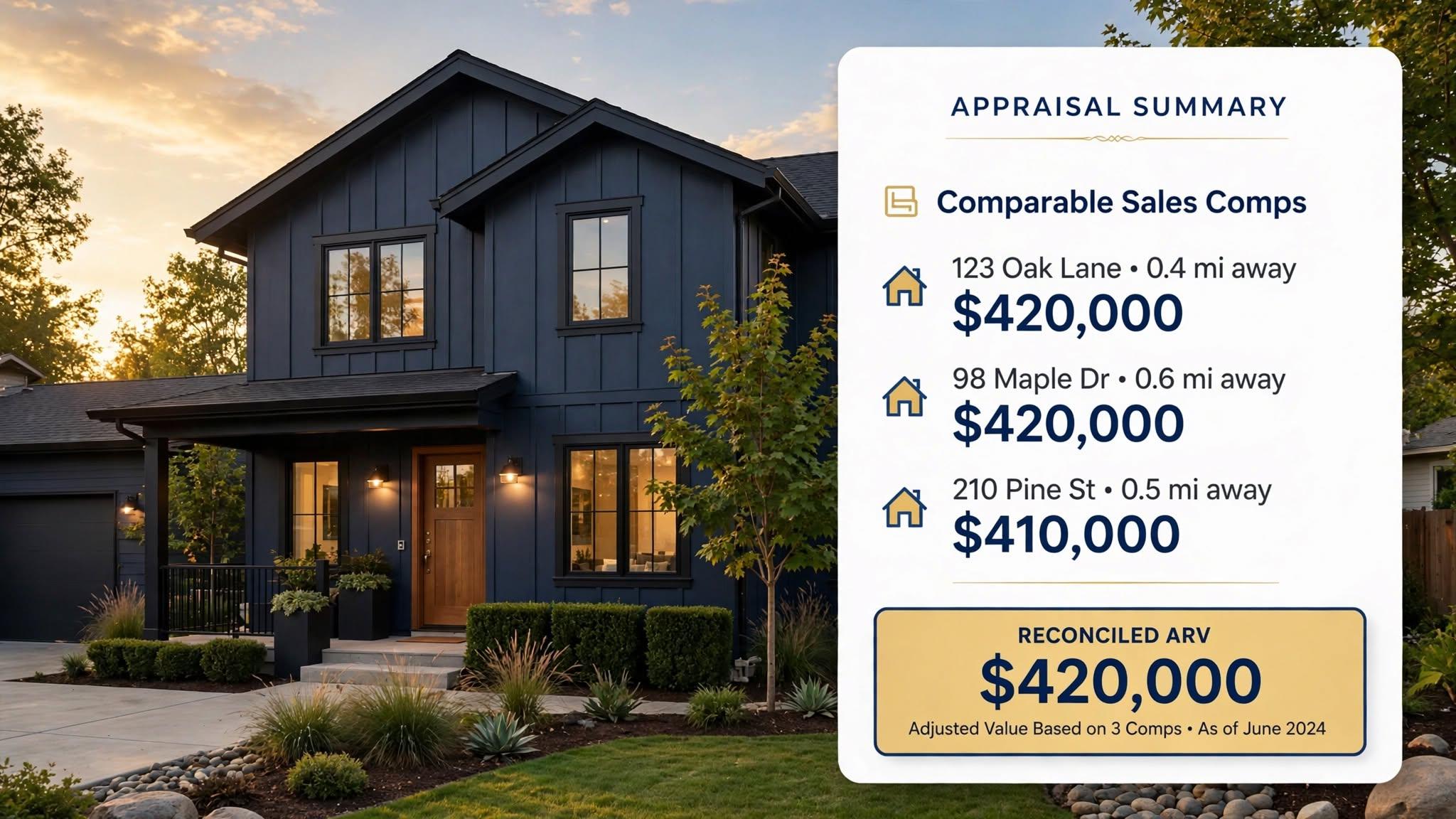
Hard money is built for the classic flip. You buy a house that needs work, renovate it within months and sell it or refinance it. HWC lends against the deal itself, the purchase price, the scope of work and the expected after-repair value, rather than your W-2s.
The trade-off is the ARV cap. HWC's loan is the lower of the full project cost or 70% of after-repair value. Our guide to how much cash you need to close a 100% LTC loan shows how that cap can add cash to your closing. You can also read how ARV loans work.
Hard money fits when:
The property is a single-family home or a small multifamily you can finish in 6 to 12 months.
The renovation, not new construction, is what creates the value.
You want to pay off early without a prepayment penalty.
When a bridge loan fits
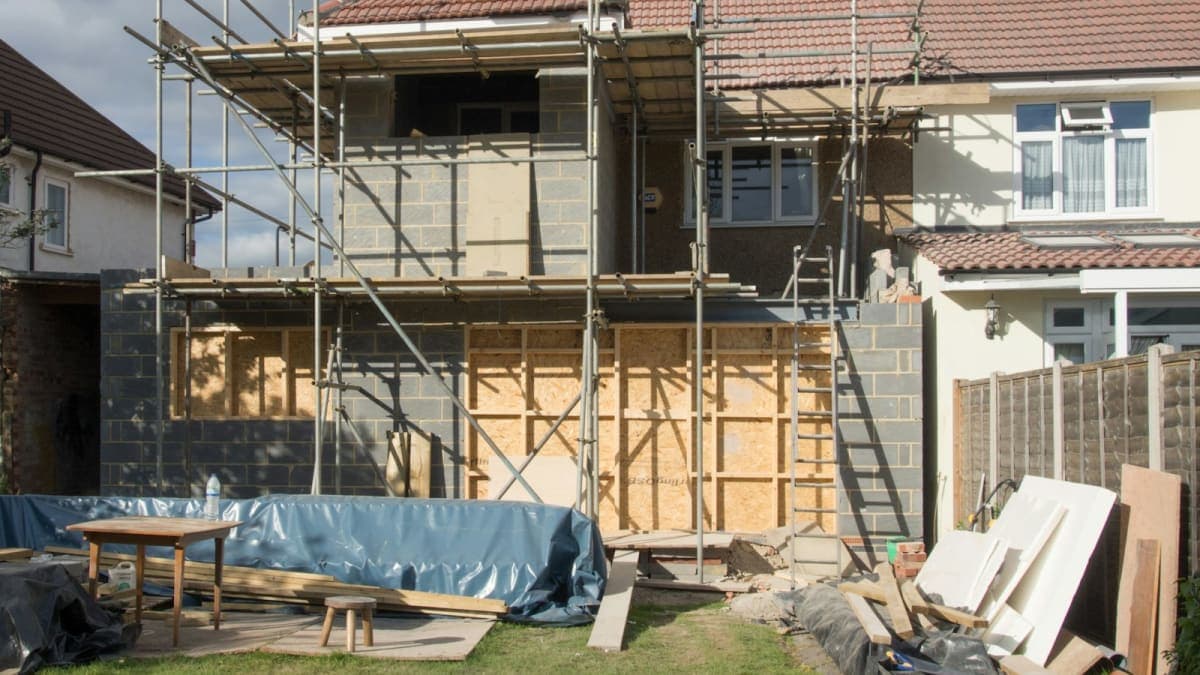
A bridge loan covers projects where value takes longer to show up. HWC's bridge loans page lists four uses: fast acquisitions such as auctions, estate sales and off-market deals; multifamily purchase and rehab before rents stabilize; new construction; and replacing debt that is about to mature.
The multifamily point matters most. A bank looks at a building's current rent. HWC's multifamily bridge loans do not consider current cash flow or DSCR, so a half-vacant 6-unit or a building mid-renovation can be financed on the business plan.
For ground-up work, HWC's ground-up construction loans fund in layers: up to 50% of entitled land, 75% of horizontal development such as roads and utilities, and 100% of vertical construction, with the total held to 90% of cost.
Not sure which loan your deal needs? Send HWC the address, the plan and the numbers. A loan officer will match the deal to hard money or bridge financing. Discuss your deal or call 1-800-674-3804.
Three worked examples
These are illustrative numbers, not quotes. Closing costs, points, interest and reserves come on top in every case.
Line | Single-family flip | 6-unit value-add | Ground-up build |
|---|---|---|---|
Best fit | Hard money | Bridge | Bridge (construction) |
Purchase or land | $220,000 | $600,000 | $100,000 land |
Rehab or site work | $60,000 | $150,000 | $100,000 horizontal |
Vertical construction | None | None | $500,000 |
Total cost | $280,000 | $750,000 | $700,000 |
How the loan is sized | Lower of cost or 70% of $420,000 ARV ($294,000) | 90% of cost | 50% land + 75% horizontal + 100% vertical |
Loan | $280,000 | $675,000 | $625,000 |
Cost not covered by the loan | $0 | $75,000 | $75,000 |
The flip matches the default inputs on HWC's hard money calculator. In the build, the layered limits produce a $625,000 loan, about 89% of cost, which stays under the 90% ceiling.
How to choose between hard money and a bridge loan
Name the property type. Single-family or a small rental that needs work points to hard money. Five or more units, land or a subdivision points to a bridge loan.
Check whether you are renovating or building. Ground-up construction goes through the bridge program.
Look at the building's current income. If it is vacant or under-rented and a bank won't lend on today's rent, a bridge loan can finance the plan.
Size the timeline. Hard money runs 6 to 12 months. A longer lease-up or build needs a term that matches it.
Run both loan formulas. Compare 100% of cost capped at 70% of ARV with 90% of cost, and see which leaves you less cash to bring.
Decide the exit first. Sale, DSCR refinance or portfolio loan. The exit decides how long you need the loan.
Planning the exit
Both loans are temporary. HWC's bridge page lists four ways out: sell the property, refinance into a 30-year DSCR loan, do a cash-out refinance, or roll stabilized properties into a rental portfolio loan.
If you plan to hold, the refinance qualifies on rent. Our guide to what a DSCR loan is explains how a finished property's rent sets the size of that loan.
Get the right short-term loan for your project
HWC funds hard money and bridge loans in all 50 states and D.C. Share the deal and we'll tell you which program fits. Start your deal inquiry or contact our team.
Sources
Hedge Wealth Capital, Bridge Loans program page
Hedge Wealth Capital, Hard Money Loans program page and calculator
Rocket Mortgage, Bridge loan vs. hard-money loan (December 28, 2025)
Miche-Nerson Brutus President and CEO, Hedge Wealth Capital
Related loan programs
Hard Money Loans: up to 100% of purchase and rehab, 70% ARV cap, 6 to 12 month terms.
Bridge Loans: up to 90% of cost on multifamily and new construction.
DSCR Loans: refinance a finished project into a long-term rental loan.
This article is general information, not a commitment to lend. Financing is subject to underwriting, property eligibility, program availability and final loan terms. Examples are illustrative. Rates, fees, leverage and terms vary by transaction.